Septic Tank Replacement in Maury County
When the old system is done, here's what actually happens next.
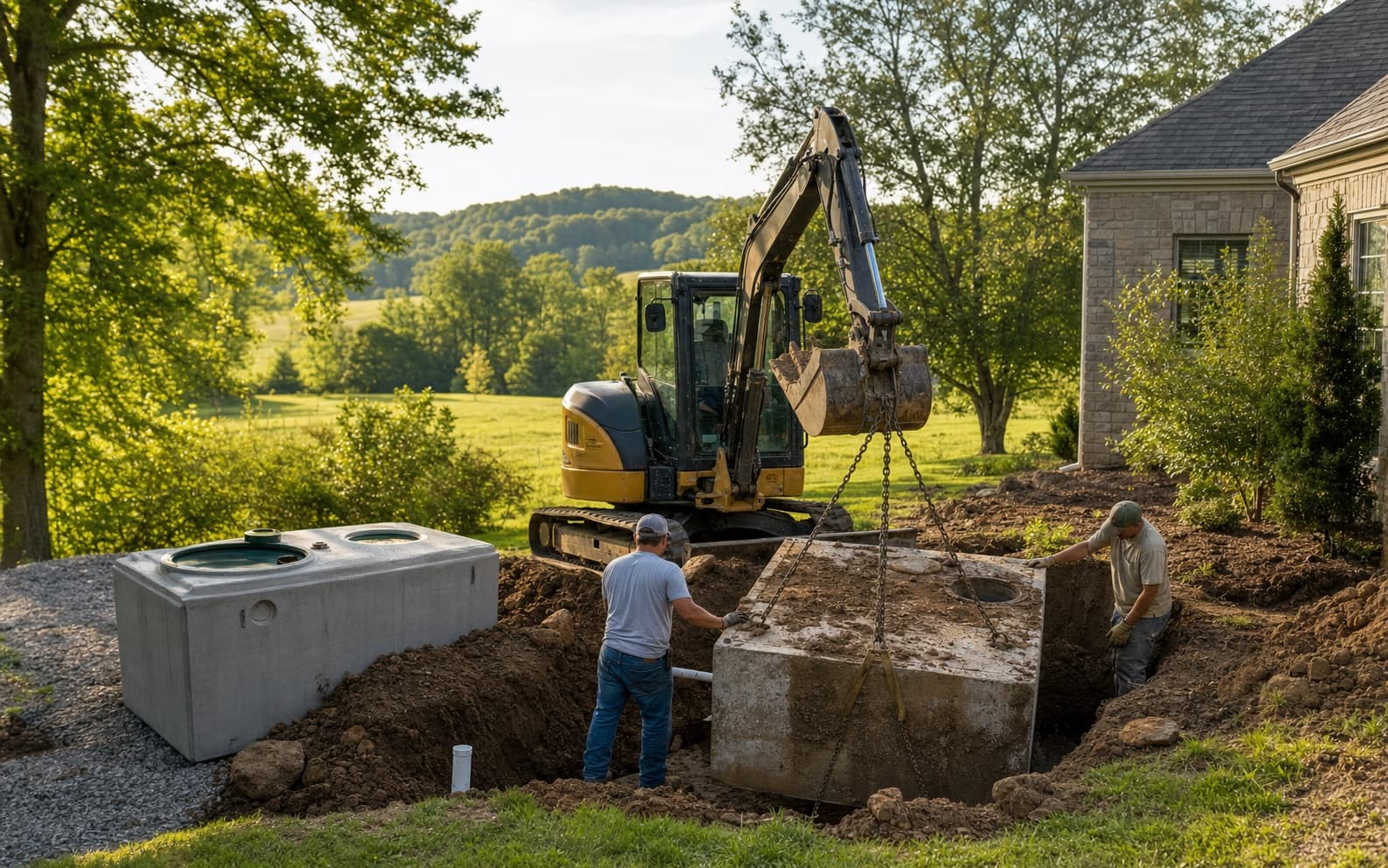
What does replacing a septic system involve in Maury County?
Replacement starts with a failure diagnosis, not a backhoe. TDEC's Columbia Environmental Field Office designs the fix for a failing system and issues the permit before work begins; the repair permit itself carries no state fee. Full replacements tend to land in the same territory as a new install, roughly $8,000 to $30,000 or more, with engineered designs at the high end. The current soil evaluation decides what gets built, whatever the old sketch shows.
TDEC construction or repair permit before work
Diagnose the failure and pull the existing record
Roughly $8,000 to $30,000+, same territory as a new install
An installer with the required state permit; verify insurance separately
Does your septic system need repair or replacement?
Plenty of septic problems do not need a whole new system. Component failures may be repairable; a disposal area that no longer accepts effluent needs a state-approved fix. Treat this table as triage rather than a diagnosis. TDEC, the existing record, and the site inspection control the final scope.
- Situation
- One backup after a storm, then normal
- What to establish next
- Check plumbing, tank level, loading, and wet-weather conditions before assuming replacement
- Situation
- Sewage backing up on dry days
- What to establish next
- Stop water use and begin prompt failure diagnosis and the TDEC repair path
- Situation
- Damaged baffle, lid, or inlet line
- What to establish next
- A component repair may fit, but confirm the permit category and full condition
- Situation
- Tank cracked, collapsed, or badly corroded
- What to establish next
- Keep people away and assess tank replacement under the state-approved scope
- Situation
- Pump, float, alarm, or control problem
- What to establish next
- Service the mechanical system before concluding the disposal area failed
- Situation
- Wet, spongy, or smelly disposal area
- What to establish next
- Keep traffic away and request a qualified evaluation and TDEC repair design
- Situation
- Roots found in one line
- What to establish next
- Locate the extent and underlying cause before choosing line repair or replacement
- Situation
- Older system with recurring symptoms
- What to establish next
- Use records and inspection findings. Age alone does not decide the scope
| Situation | What to establish next |
|---|---|
| One backup after a storm, then normal | Check plumbing, tank level, loading, and wet-weather conditions before assuming replacement |
| Sewage backing up on dry days | Stop water use and begin prompt failure diagnosis and the TDEC repair path |
| Damaged baffle, lid, or inlet line | A component repair may fit, but confirm the permit category and full condition |
| Tank cracked, collapsed, or badly corroded | Keep people away and assess tank replacement under the state-approved scope |
| Pump, float, alarm, or control problem | Service the mechanical system before concluding the disposal area failed |
| Wet, spongy, or smelly disposal area | Keep traffic away and request a qualified evaluation and TDEC repair design |
| Roots found in one line | Locate the extent and underlying cause before choosing line repair or replacement |
| Older system with recurring symptoms | Use records and inspection findings. Age alone does not decide the scope |
Leaning repair? Start with our septic repair page instead.
Why doesn't the old permit settle the replacement?
TDEC's current service page requires a permit before work on a faulty system. That means the issued repair or construction plan controls, and a decades-old sketch or the location of the failed trenches does not. Read the state repair-permit instructions before anyone excavates.
Here is the part that surprises owners: a lot that passed decades ago may not pass today. Many Maury systems went in under standards that predate the current Rule 0400-48-01 soil-mapping rules, and karst ground that once took a straight gravity field can map differently now. That is why replacements here lean toward engineered designs more often than owners expect. The approved soil consultant and TDEC decide what your lot supports today, not what it supported in 1985.
What drives septic replacement cost?
- System type. A conventional gravity design often has fewer mechanical components. LPP, mound, drip, and advanced-treatment designs can add pumps, controls, electrical work, engineering, or service obligations.
- What the soil says. The evaluation decides the permitted system. Rock, usable soil depth, slope, and layout can add design or excavation work, but only the parcel evaluation shows which factors apply.
- Full vs partial. Replacing only the drainfield, tank, line, or mechanical component may avoid unrelated work when the state-approved scope allows sound components to remain.
- Access and demolition. Tight sites, long setbacks from wells and creeks, and removing the old components all add hours.
Planning ranges cannot replace a site diagnosis and state repair design. Use the Maury County cost guide to compare inclusions, then rely on a written estimate from a permitted installer.
Research and review. The Maury Septic editorial team checked this guide against current TDEC rules and service pages, plus the Tennessee Geological Survey atlas for Maury County. Private-market costs are identified as planning ranges. For a specific property, rely on the issued permit and a written contractor scope.
Primary sources
- TDEC SSDS construction permit
Tennessee Department of Environment and Conservation
Who needs a permit, application requirements, review timing, current state fees, and inspection duties.
- TDEC septic services and online application
Tennessee Department of Environment and Conservation
Conventional, repair, and alternative-system applications, plus soil-map requirements.
- Tennessee SSDS regulations, Chapter 0400-48-01
Tennessee Department of Environment and Conservation
Official rule index for permits, design, maintenance, soil consultants, installers, and fees.
- TDEC SSDS records search
Tennessee Department of Environment and Conservation
Official state viewer for locating septic-system permits, site sketches, and related records.
- TDEC licensed installers and pumpers
Tennessee Department of Environment and Conservation
State licensing requirements and the current installer and pumper lookup.
- Environmental Geology Atlas of Maury County
Tennessee Geological Survey
State-published geologic, unstable-materials, flood-prone-area, mineral-resource, and sinkhole maps for Maury County.
Ready for a septic estimate in Maury County?
What do homeowners ask about septic replacement?
Do I need a permit to replace a septic system in Tennessee?
Yes. TDEC requires a construction permit for a new system and for repair of a faulty system. The agency decides the approved repair or replacement from the current site information. Do not assume an old layout can simply be rebuilt; apply before work begins and follow the issued design.
How long does a septic replacement take?
There is no reliable countywide duration. TDEC's application review generally takes 10 days and must finish within 45, but that clock covers the review only. Diagnosis, soil work, and contractor scheduling come before it; construction and final inspection come after. Ask for a written milestone schedule once the state scope is known.
Can I replace just the drainfield and keep the tank?
Possibly. TDEC's repair design may allow sound, correctly sized components to remain while other parts are repaired or replaced. Do not assume the tank or old trenches can be reused from appearance alone. The existing record, component condition, current site information, and issued state design control the allowed scope.
Can I replace a septic system myself?
Not without the right state permit. Tennessee restricts who may construct, alter, or repair an SSDS, and a general contractor license does not cover it. Before anyone excavates, ask TDEC which installer category the issued design requires, then verify that permit in the state's active-installer viewer.
Ready to request a replacement estimate?
Request a septic estimate
Step 1 of 2Free · no obligation · submitted for private review and possible local routing.
No public lead list. See exactly how routing works in our privacy policy.
Related: new installation · septic repair · drainfield failure · failed soil test options · septic system lifespan · old tank abandonment · aerobic service · the Maury County permit guide · cost guide
Regulatory claims are checked against primary sources. Site-specific approval and pricing still require TDEC and a written installer estimate.